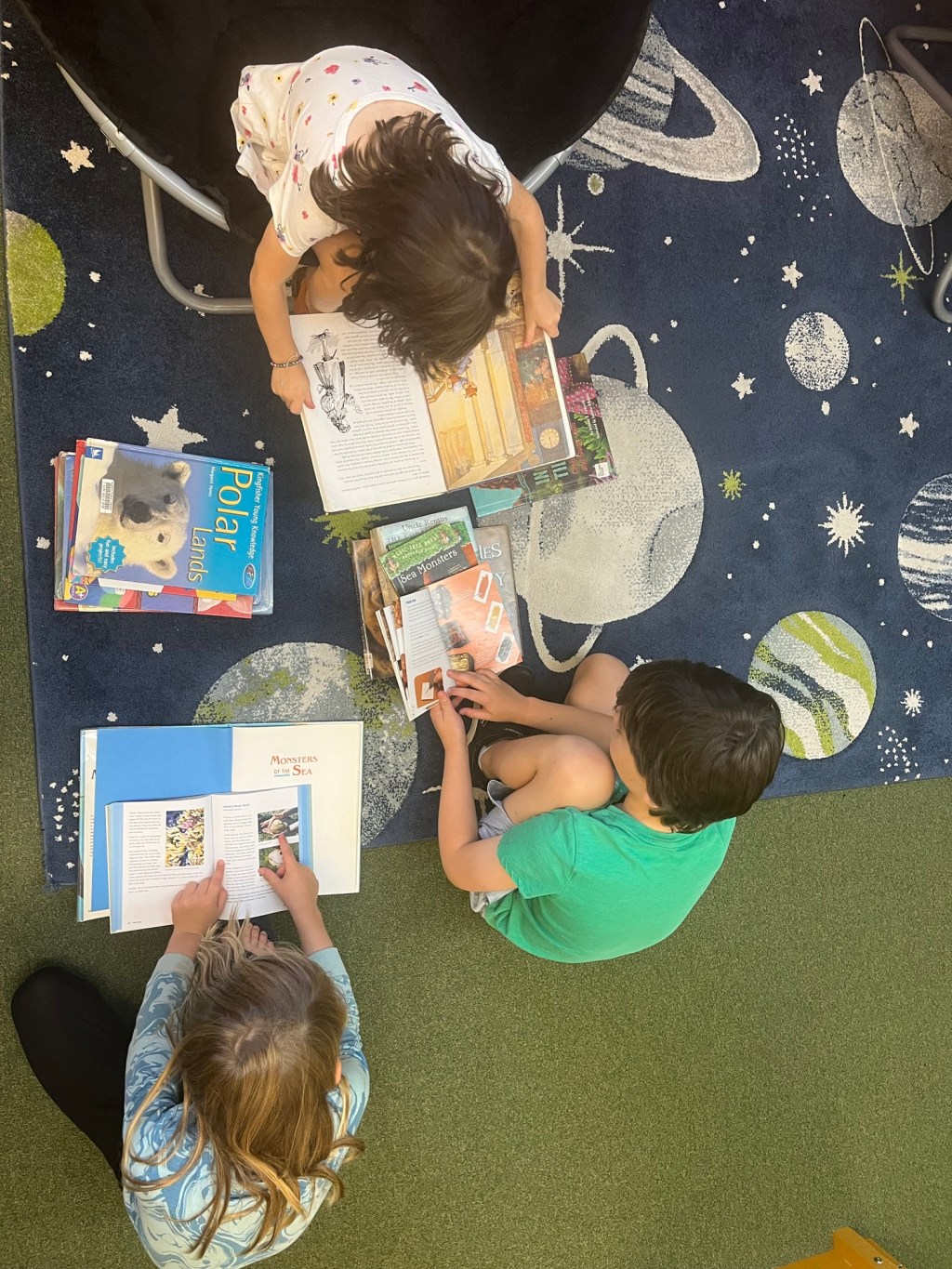
In today’s education culture, there’s an unspoken race to get kids reading earlier and earlier. Preschoolers are expected to recognize sight words, and kindergarten classrooms often look like mini reading boot camps. But here’s the truth: research doesn’t support the idea that earlier is always better when it comes to learning to read.
Several studies comparing children who begin formal reading instruction at age five with those who start at age seven have found something surprising—by around age 11, both groups typically read at the same level.
In some cases, the later readers even show better comprehension and a more positive relationship with reading. Why? Because they’ve had extra years to develop the foundation for literacy: language skills, imagination, problem-solving, and a love for stories.
Countries like Finland, consistently ranked among the top in global education, don’t introduce formal reading instruction until age seven. Before that, the focus is on play, social skills, movement, and oral language—all of which prepare the brain to read with less stress and more joy.
In our homeschool, I’ve chosen to follow a similar approach. Instead of forcing early reading drills, we:
Read aloud daily — not just picture books, but rich, interesting stories that spark curiosity.
Talk about ideas — after reading or exploring something new, we ask “Why do you think that happened?” or “What might happen next?”
Explore hands-on learning — cooking, nature walks, experiments, and games that teach sequencing, letters, vocabulary, and critical thinking. Let reading unfold naturally — when my kids are ready, the skills stick faster and with less frustration.
By slowing down, I’m not just teaching my kids to read words—I’m teaching them to think, wonder, and love learning. That’s a foundation that lasts far beyond childhood.
If you’ve been feeling pressured to push early reading, I want to encourage you: it’s okay to trust the process. Give your child time to bloom in their own season.
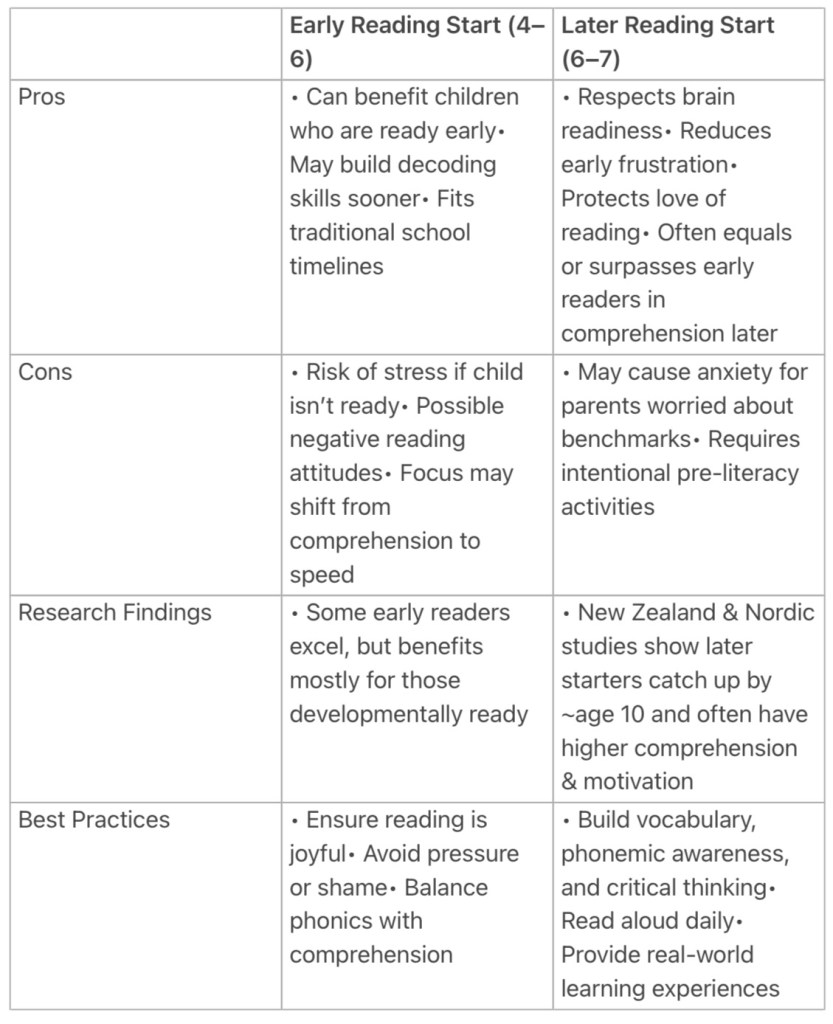
Here’s a quick summary:
And just a little encouragement: although I was sure he would be an early reader, my eight-year-old didn’t start reading until 7½. Now, he reads whenever he gets a chance—high school-level books before bed, books about chemistry and the periodic table, a variety of books everyday. He loves to learn, asks thoughtful questions, and has a vocabulary you wouldn’t believe. Every day, he’s proving that when curiosity and thinking skills come first, reading—and a love of learning—naturally follows.
Remember, kids bloom on their own timelines. Trust the process, stay consistent, and keep offering them love and stories along the way—you’ve got this.
 A Bowl Full of Learners
Leave a comment