This post contains affiliate links. As an Amazon Associate, I earn from qualifying purchases—at no extra cost to you. Thank you for supporting A Bowl Full of Learners!
At A Bowl Full of Learners, holidays are the perfect time to mix joy, creativity, and a little hands-on science! This Fourth of July, we brought the “boom” to the backyard with these explosive experiments and vibrant art projects that double as chemistry lessons.
Here’s what we did—and the science behind the fun:
⸻
💥 1. Foamy Fireworks in a Flask
Potassium Iodide + 12% Hydrogen Peroxide + Dish Soap + Glitter
What We Did:
In an Erlenmeyer flask, we mixed 2 Tbs dish soap, food coloring, glitter, and 300 mL 12% hydrogen peroxide. Then we carefully added a 20g potassium iodide + 1/2c H2O solution—and stood back!
What Happened:
A thick, glittery foam shot up like a firework!
The Science:
This is a dramatic version of the decomposition of hydrogen peroxide. The potassium iodide acts as a catalyst, breaking down the peroxide into water and oxygen gas super fast. The gas gets trapped in the soap, forming foamy “fireworks.” It’s an exothermic reaction—so you might even feel heat! For even more fun, combine multiple flasks in various colors and delight in the show!
⸻
🌈 2. Rainbow Lava Lamps in Test Tubes
Vinegar, Oil, Food Coloring, Alka-Seltzer
What We Did:
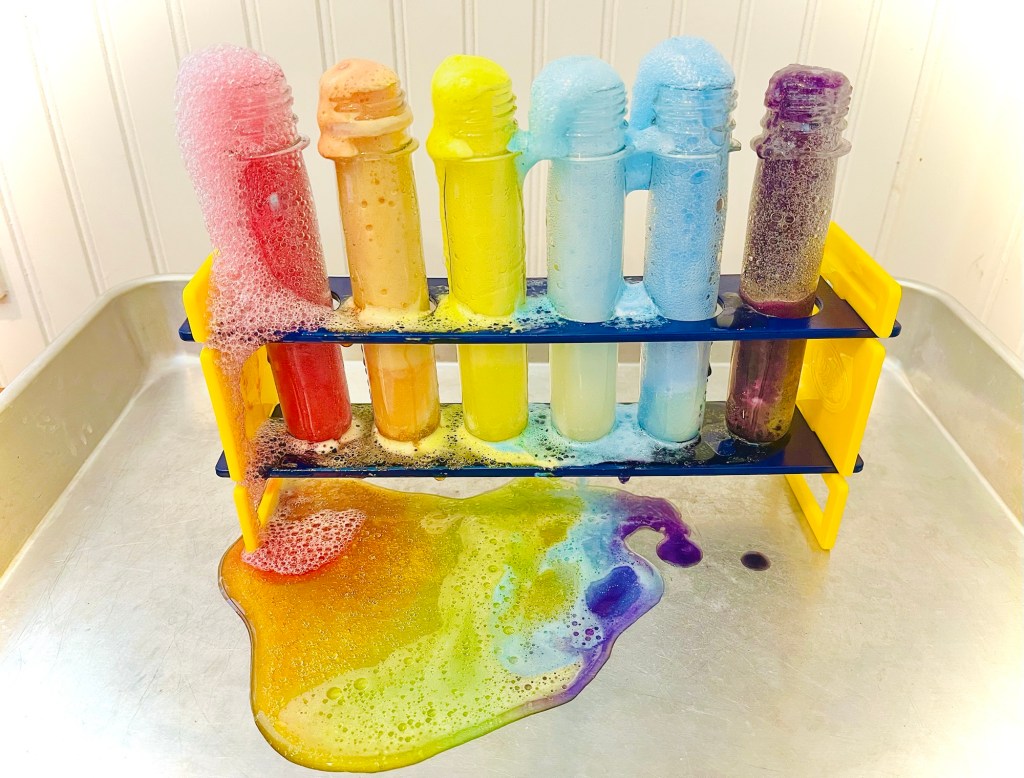
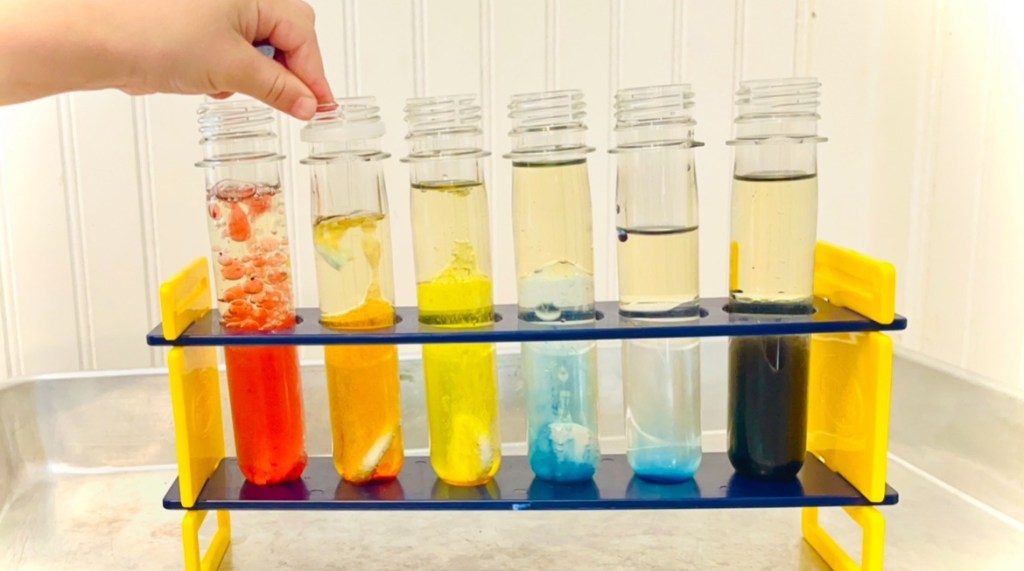
We layered colored vinegar and oil into test tubes to create a Fourth of July color palette. When we dropped in Alka-Seltzer tablets, the mixture bubbled and danced like a living lava lamp. Denture cleaner tablets can be added for a slightly different experience.
The Science:
Oil and vinegar don’t mix—oil floats because it’s less dense. When Alka-Seltzer reacts with the vinegar (an acid), it releases carbon dioxide gas. The bubbles carry the colored vinegar upward, and when the gas escapes, the droplets fall back down. This creates that mesmerizing, bubbling motion.
⸻
👕 3. Firework Tie-Dye Shirts
Red & Blue Permanent Marker + Rubbing Alcohol + Hydrogen Peroxide
What We Did:
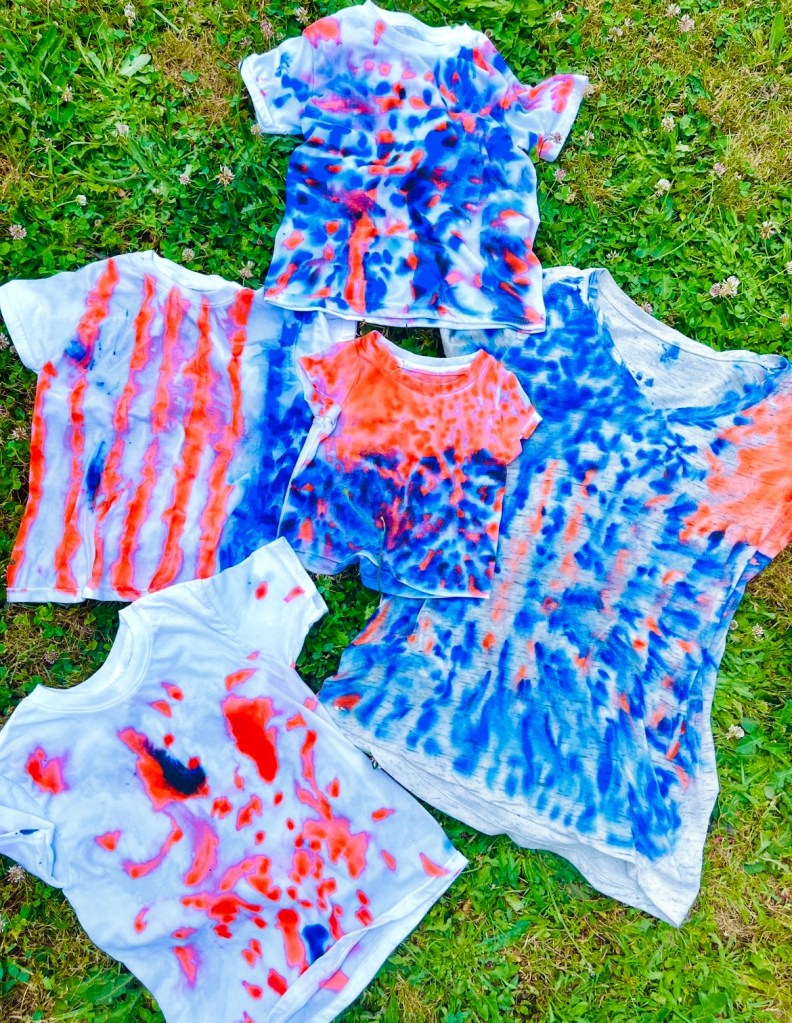
We drew firework bursts on white t-shirts with permanent markers, then sprayed the designs with rubbing alcohol to watch the colors bloom. After drying, we added a few drops of 12% hydrogen peroxide for a cool “acid-wash” effect.
The Science:
The alcohol dissolves the ink and helps it spread out through the fabric, creating that tie-dye look. The hydrogen peroxide breaks down pigment bonds and causes fading, giving a sun-bleached look in real time. Bonus: it’s a safe, washable chemistry lesson!
⸻
🎨 4. Exploding Paint Fireworks
Film Canisters + Washable Paint + Alka-Seltzer + Poster Board
What We Did:
We filled film canisters with a little paint and water, added an Alka-Seltzer tablet, quickly snapped the lid, flipped it onto white poster board—and BOOM! Colorful splats flew like fireworks.
The Science:
Alka-Seltzer reacts with the water to form carbon dioxide gas. The pressure builds in the sealed container until it pops—launching the canister upward and sending paint flying. It’s a fun way to explore gas pressure and propulsion—with a keepsake poster to show for it.
⸻
🇺🇸 Why It Matters
Science isn’t just test tubes and textbooks—it’s art, wonder, and messy discovery. These activities let kids:
• Ask questions and predict outcomes
• Observe real chemical reactions
• Create while they learn
Best of all? They’ll remember this holiday for more than just fireworks—they’ll remember the joy of learning together.
🇺🇸 Make This Fourth of July Unforgettable (and Educational!)
Sign up below and I’ll send you free printable activities—from foamy fireworks to fizzy test tube experiments—plus guided observation sheets to help your kids learn while they play!
🎇 Click here to join and get your free printables!
 A Bowl Full of Learners
Leave a comment